News Catalyst
Crypto markets opened 10 June 2026 in a decisively news-driven state. Cointelegraph analysis warns that Bitcoin may slide toward $50K while it struggles to hold $60K support, and a parallel report notes BTC slipping toward $62K local lows as bear-market patterns repeat — a macro backdrop that drags ETHUSD into the same directional current and lifts intraday range. Compounding this, the US Inflation Rate prints today (forecast 0.5% MoM, 4.2% YoY, with Core CPI 2.9% YoY) alongside a Bank of Canada rate decision and China inflation data, all scheduled high-impact releases per the TradingView economic calendar. A hotter-than-forecast CPI would harden the risk-off bias already pressuring crypto, extending the kind of sustained, directional moves that an ADX trend-strength filter is specifically built to ride — while also threatening whipsaw spikes around the release itself.
Trade Summary
This strategy uses the Average Directional Index (ADX) as a trend-strength gate that only permits trades when a genuine trend is underway, filtering out the choppy, range-bound conditions where trend-following systems bleed capital. ADX measures the strength of a move without regard to direction; the +DI and –DI lines then resolve which side controls the tape. A confirming surge in Volume validates that the move carries real participation rather than thin-liquidity drift, and a closing candlestick pattern times the entry.
It is a directional, two-sided system — long when +DI leads, short when –DI leads — and it is built to perform in high-volatility, trending markets rather than quiet consolidations. ETHUSD on the 30-minute chart is a natural fit: today's crypto-wide directional pressure and the volatility injected by the US CPI print are exactly the conditions in which ADX separates a real trend from noise. Risk is contained with an ATR-based stop so position size adapts to the elevated range.
The Anatomy of the Trade
The Logic: What Inefficiency Are We Exploiting?
Most retail traders apply trend-following entries indiscriminately, taking breakout and momentum signals in conditions that are actually range-bound. The result is a string of small losses as price oscillates and stops are picked off on both sides. The inefficiency this strategy exploits is behavioural: the market spends a large fraction of its time going nowhere, yet the majority of participants keep trading as if every move is the start of a trend. By demanding that ADX rises above 25 before any entry is considered, we simply refuse to participate until the data confirms a trend has real strength behind it.
The edge sharpens through confluence. ADX above 25 with the dominant directional line (+DI for longs, –DI for shorts) tells us a trend exists and which way it points; a Volume expansion confirms that institutions — not just thin order flow — are driving the move; and the candlestick pattern (a Bullish Pin Bar for longs, a Bearish Engulfing for shorts) marks the precise bar where momentum reasserts itself. Each layer is independent, so requiring all three to align filters out the false signals that a single indicator would wave through.
Setup Requirements
- Primary indicator: ADX with default settings (14-period), using the +DI / –DI directional lines and a 25 trend-strength threshold
- Confirmation indicator: Volume — require an above-average volume bar on the signal candle to confirm genuine participation
- Pattern confirmation: Bullish Pin Bar (long entries) / Bearish Engulfing (short entries) via the Candle Pattern rule
- Risk management: ATR (Average True Range) for dynamic stop-loss placement that adapts to crypto volatility
- Primary symbol: ETHUSD — its high intraday volatility produces clean, sustained directional legs once a trend engages, giving ADX room to register strength
- Timeframe: 30-minute charts. A longer intraday timeframe smooths the ADX reading and materially reduces the false trend signals that plague lower timeframes in crypto
- Adaptability: The logic transfers to other liquid crypto pairs (BTCUSD, SOLUSD) and trending Forex majors, but the ADX threshold and ATR multiplier must be re-optimised per instrument's volatility profile
Entry Rules
Every entry requires all conditions to align. If the trend-strength gate is closed or the confirmation is missing, there is no trade.
- Long entry: ADX > 25 with +DI above –DI (strong uptrend) and an above-average Volume bar and a Bullish Pin Bar closes
- Short entry: ADX > 25 with –DI above +DI (strong downtrend) and an above-average Volume bar and a Bearish Engulfing pattern closes
Enter at the close of the confirmation candle. Do not anticipate the ADX crossing 25 — wait for the bar to close with the threshold satisfied before committing capital.
Exit Rules
- Stop loss: 1.5× ATR from entry price. For a long trade the stop sits 1.5 ATR below entry; for a short, 1.5 ATR above. The ATR-based stop widens in volatile sessions and tightens in quiet ones, keeping risk proportional to current conditions
- Take profit: Minimum 2:1 reward-to-risk ratio. If the stop distance is 1.5 ATR, the target sits at least 3.0 ATR from entry
- Secondary exit: ADX drops below 20, signalling the trend is weakening and the edge that justified the trade has decayed — close the position even if neither stop nor target has been reached
Whichever exit triggers first closes the trade. The stop loss is non-negotiable — never widen it to give a losing trade more room, because that single habit destroys more trend-following accounts than any other.
Risk Management
- Risk per trade: 1–2% of account equity. Never exceed this regardless of how strong the ADX reading looks
- Risk-to-reward ratio: Minimum 2:1, so the strategy stays profitable across a large sample even with a sub-50% win rate
- Position sizing: Size from the ATR-based stop distance. Risking 1% of a $10,000 account ($100) on ETHUSD with a stop distance equivalent to $40 of price movement implies a position of roughly 2.5 ETH-equivalent units — always derive size from the stop, never the other way around
- Maximum concurrent positions: Limit exposure to one or two positions across correlated crypto pairs at any time to avoid stacking the same directional bet
LONG ENTRY:
  ADX(14) > 25 with +DI above –DI
  AND above-average Volume bar
  AND Bullish Pin Bar closes

SHORT ENTRY:
  ADX(14) > 25 with –DI above +DI
  AND above-average Volume bar
  AND Bearish Engulfing closes

STOP LOSS:   1.5 × ATR from entry

TAKE PROFIT: 2:1 minimum reward-to-risk
             // Or exit when ADX falls below 20

RISK:        1–2% of account per trade

TIMEFRAME:   30-minute
SYMBOL:      ETHUSD
Copy the pseudo-code above and paste it as a Strategy Note in the Strategy Builder so the rules sit alongside your build as documentation.
Common Pitfalls
Understanding how this strategy breaks down is as important as knowing when it works. These are the most common ways traders undermine an otherwise sound trend-strength system.
Low Volatility / Ranging Markets
The entire premise rests on ADX confirming a real trend. When ETHUSD coils into a tight range, ADX drifts below 20 and the few signals that fire produce moves too small to clear spread and reach a 2:1 target. If ADX is sitting below 20, the strategy is telling you not to trade — respect that signal rather than forcing entries.
High-Impact News Events
ETHUSD reacts violently to US CPI releases, FOMC decisions, ETF flow news, and crypto-specific regulatory headlines. Today's inflation print is a prime example: a surprise can spike price through your stop and reverse before the ADX trend even registers. Avoid opening new positions in the 30 minutes surrounding scheduled high-impact releases, and if you are already in a trade, trust the ATR stop to do its job.
Overtrading by Relaxing the Gate
The most seductive mistake is taking a directional signal when ADX is at 22 or 23 — close, but not above the 25 threshold — because the candlestick and volume look convincing. The 25 threshold is the strategy's edge; entries below it are statistically just range-trading in disguise. Hold the line on every condition.
Curve-Fitting Parameters
It is tempting to tune the ADX threshold, the ATR multiplier, and the volume lookback until a backtest looks flawless. That is fitting parameters to historical noise, not finding an edge. Use standard settings (ADX 14, threshold 25, ATR 14) and validate the logic across multiple market regimes instead of chasing a perfect curve.
Revenge Trading Through Drawdowns
Even a sound trend filter endures losing streaks, especially when a budding trend fails and reverses. A run of 5–8 consecutive losses is statistically normal. The danger is abandoning the system mid-drawdown or doubling size to "win it back". Commit to a statistically meaningful sample of at least 50–100 trades before judging the strategy, and keep risk fixed throughout.
Build Strategy using Arconomy
Open the Strategy Designer and create a new strategy called "ETHUSD ADX Trend Strength Filter". The build wires the ADX trend gate to the Volume and candlestick confirmations before placing a risk-managed trade.
| Step | Rule(s) Required | Description | Key Configuration |
|---|---|---|---|
| Data | Price Data | Configure the Symbol and timeframe for the strategy |
|
| Entry | ADX Indicator | Gate entries on trend strength and direction — only fire when ADX confirms a real trend |
|
| Filter | Volume Data | Require an above-average volume bar to confirm genuine participation in the move |
|
| Filter | Candle Pattern | Time the entry on a closing reversal candle in the trend direction |
|
| Entry Logic | Logic | Combine all conditions with an AND gate so every requirement must be met |
|
| Risk | Place Trade | Add Stop Loss and Take Profit using an ATR-based stop |
|
| Backtest | Run a backtest across multiple market regimes |
|
Backtest Considerations
When backtesting this strategy on ETHUSD, span a minimum of 6–12 months and ensure the window covers different regimes — strong directional trends, choppy consolidations, and volatile news-driven sessions. Because the ADX gate is designed to keep you out of ranges, a test that only covers a trending stretch will overstate the trade count and win rate; deliberately include flat periods so you can confirm the filter is correctly suppressing entries.
Watch these metrics closely: profit factor (target above 1.3), maximum drawdown (know the worst case before risking capital), and the distribution of exits between target hits, ATR stops, and ADX-decay exits. If most trades close on the ADX-below-20 exit rather than reaching the 2:1 target, the trends you are catching may be too short-lived for the 30-minute timeframe — review the threshold via the backtesting documentation.
Use realistic execution assumptions for crypto. ETHUSD spreads widen sharply during volatile sessions and around major data releases, and slippage on stop exits can be material when liquidity thins. Model a conservative spread plus slippage on every fill, and avoid drawing conclusions from low-liquidity holiday periods where the order book is unrepresentative.
Key Takeaways
- The core edge is selectivity: ADX above 25 keeps you out of range-bound chop and only commits capital when a genuine trend has measurable strength behind it.
- Confluence matters — ADX direction, a Volume expansion, and a closing candlestick pattern must all align, which filters out the false signals any single indicator would pass.
- ATR-based stops and a minimum 2:1 reward-to-risk ratio let the strategy stay profitable even with a sub-50% win rate, so focus on consistency over hit rate.
- Avoid trading when ADX is below 20 and around high-impact releases like today's US CPI print, where whipsaws blow through technical levels.
- Backtest across trending and ranging regimes with realistic crypto spread and slippage before committing real capital, over a sample of at least 50–100 trades.
Credits
The strategy idea originated from the following YouTube channel. Concepts have been adapted and structured for systematic implementation by Arconomy.
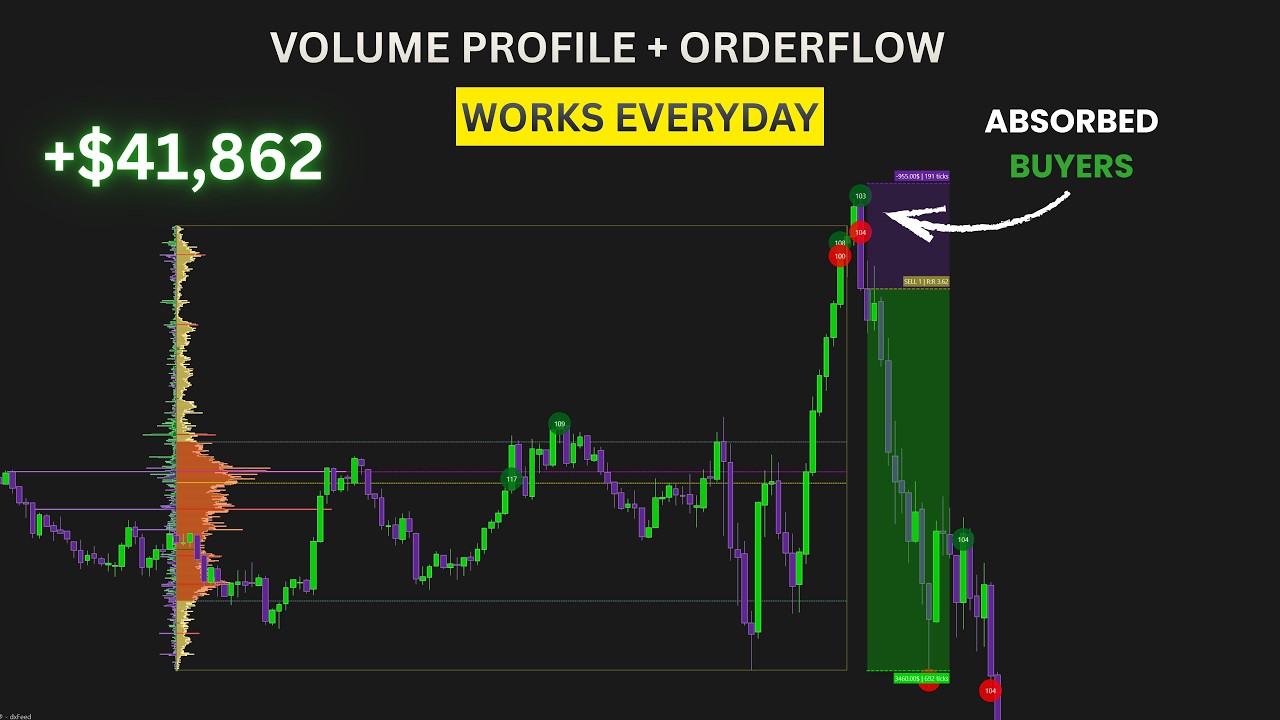
In the source video, Faiz SMC demonstrates reading order flow and volume profile to gauge where genuine participation enters a move — the same participation-confirmation principle this post systematises by pairing an ADX trend-strength gate with a Volume filter on ETHUSD.