News Catalyst
Silver sits at $75.27, consolidating within a volatile May range of $71–$88 as commodity markets digest a reshuffling of aluminium and energy trade flows. Today’s key macro event is the US ISM Manufacturing PMI release at 15:00 UK time (10:00 ET) — a high-impact USD data point forecast at 52.5 versus a previous reading of 52.8. Any material deviation will inject fresh directional volatility into dollar-denominated metals. Meanwhile, growing optimism around a Middle East ceasefire is unwinding the safe-haven premium that supported silver through much of May, with Brent crude sliding to five-week lows as geopolitical risk reprices lower. The result is a classic squeeze setup: XAGUSD has been compressing into a narrowing range ahead of a known volatility catalyst, creating exactly the conditions this Bollinger-Keltner strategy is designed to exploit — a period of abnormally low measured volatility followed by a directional expansion once the ISM print forces participants to reprice.
Trade Summary
This is a volatility squeeze breakout strategy. When Bollinger Bands contract inside the Keltner Channel, it signals that measured volatility has dropped below its normal range — the calm before the storm. The strategy waits for the squeeze to fire (Bollinger Bands expanding back outside the Keltner Channel), then trades the resulting directional breakout with Bullish Engulfing or Bearish Engulfing candle confirmation.
The strategy is directionally neutral — it trades bullish on upside breakouts and bearish on downside breaks with equal conviction. It performs best when macro catalysts such as the ISM PMI inject fresh volatility into a previously compressed instrument, resolving the squeeze into a sustained directional move rather than a false expansion that reverses within a few bars.
The Anatomy of the Trade
The Logic: What Inefficiency Are We Exploiting?
Bollinger Bands measure volatility using standard deviation, while Keltner Channels measure it using the Average True Range. During periods of low volatility, Bollinger Bands contract faster than Keltner Channels because standard deviation collapses more sharply than ATR when price action compresses. Eventually the Bollinger Bands move entirely inside the Keltner Channel — the squeeze. This state is inherently unstable: volatility is mean-reverting, and the longer a squeeze persists the higher the probability that the next move will be a meaningful directional expansion.
When volatility returns, the Bollinger Bands expand back outside the Keltner Channel (the squeeze fires), indicating that a potential breakout is underway. The Engulfing candle confirmation is what turns a statistical observation into a tradeable signal. A squeeze release without price-action validation frequently produces false breakouts that reverse within two or three bars; requiring a squeeze-to-expansion confluence with an Engulfing pattern ensures that price itself is confirming the direction before capital is committed.
Setup Requirements
- Primary indicators: Bollinger Bands (Period 20, 2.0 StdDev) + Keltner Channel (Period 20, 1.5× ATR) — squeeze identification when BB contracts inside KC
- Confirmation: Bullish Engulfing for long entries; Bearish Engulfing for short entries — validates that price has committed to the breakout direction
- Risk management: ATR (14-period) — sets dynamic stop loss distances that scale with XAGUSD’s current volatility regime
- Primary symbol: XAGUSD — silver’s sensitivity to USD data events and industrial demand cycles creates frequent squeeze-to-breakout setups as the metal oscillates between safe-haven flows and risk-on repricing
- Timeframe: 1h — captures intraday squeeze resolutions while filtering the micro-timeframe noise that generates false squeeze releases on 5- and 15-minute charts
- Adaptability: The Bollinger-Keltner squeeze logic applies equally to gold (XAUUSD), crude oil (WTI/Brent), and index futures (US500, NAS100); adjust ATR multiplier to match each instrument’s volatility profile
Entry Rules
All conditions must align on the same closed bar before entering a position. A squeeze release without Engulfing confirmation is not a valid entry.
- Long entry: Bollinger Bands squeeze fires (BB expand outside KC) and price closes above the upper Bollinger Band and a Bullish Engulfing candle forms and volume is ≥ 1.5× the 20-period average
- Short entry: Bollinger Bands squeeze fires (BB expand outside KC) and price closes below the lower Bollinger Band and a Bearish Engulfing candle forms and volume is ≥ 1.5× the 20-period average
Enter at the close of the confirmation candle.
Exit Rules
- Stop loss: 1.5 × ATR(14) from entry price — scaled to current XAGUSD volatility to avoid being stopped out by normal hourly fluctuations
- Take profit: Minimum 2:1 risk-to-reward ratio from entry — at least twice the ATR stop distance as the initial target
- Secondary exit: Close the position if price closes back inside the opposite Keltner Channel band, indicating the breakout has failed and volatility is contracting back into the channel
The stop loss is non-negotiable. Widening it after entry because silver “looks like it wants to continue” violates the ATR-scaled risk model and will erode long-term expectancy.
Risk Management
- Risk per trade: 1–2% of account equity per position — consistent sizing across all trades matters more than maximising any single winner
- Risk-to-reward ratio: Minimum 2:1 — the strategy requires only a 34% win rate to break even at this ratio, providing considerable room for losing streaks
- Position sizing example: $10,000 account, 1% risk = $100 risk per trade. If ATR(14) = $0.60 and stop = 1.5 × ATR = $0.90, position size = $100 ÷ $0.90 ≈ 111 oz (roughly 2.2 standard silver lots — adjust for your broker’s contract size and margin requirements)
- Maximum concurrent positions: No more than 2 open positions simultaneously — silver can gap sharply on ISM, NFP, or geopolitical headlines; concentrated exposure compounds that risk
SYMBOL:      XAGUSD
TIMEFRAME:   1h

SQUEEZE DETECTION:
  Bollinger Bands (20, 2.0 StdDev) inside Keltner Channel (20, 1.5× ATR)
  // Squeeze is ON when BB upper < KC upper AND BB lower > KC lower

LONG ENTRY:
  Squeeze fires — BB expands outside KC
  Price closes above upper Bollinger Band
  Bullish Engulfing candle on current bar
  Volume ≥ 1.5× 20-period average
  // Volatility expansion confirmed by price and pattern

SHORT ENTRY:
  Squeeze fires — BB expands outside KC
  Price closes below lower Bollinger Band
  Bearish Engulfing candle on current bar
  Volume ≥ 1.5× 20-period average
  // Volatility expansion confirmed by price and pattern

STOP LOSS:   1.5 × ATR(14) from entry
             // Dynamic — scales with XAGUSD volatility

TAKE PROFIT: 2:1 minimum reward-to-risk
             // Or close if price re-enters opposite KC band

SIGNAL EXIT: Price closes back inside opposite Keltner Channel band

RISK:        1–2% of account equity per trade
MAX TRADES:  2 concurrent positions
Common Pitfalls
Squeeze breakout strategies reward patience and punish impatience. The entire edge is built on waiting for a genuine volatility expansion — every shortcut through the confirmation process degrades the signal quality that makes the system work.
False Squeeze Releases in Low-Volume Sessions
The Bollinger Bands can briefly expand outside the Keltner Channel during the Asian session or late US hours when liquidity is thin, producing a squeeze fire that lacks the volume to sustain a directional move. Always verify that volume on the breakout bar is at least 1.5× the 20-period average; a squeeze release on below-average volume is statistically more likely to reverse than to follow through.
Trading Through ISM/NFP/FOMC Releases
XAGUSD is acutely sensitive to major USD data prints. A squeeze release that fires within 30 minutes of the ISM PMI, Non-Farm Payrolls, or an FOMC rate decision is being driven by headline flow and liquidity vacuum, not by a sustainable volatility expansion. Block new entries in a 30-minute window either side of any scheduled high-impact USD event and treat existing positions as exit-only during that window.
Overtrading and Relaxing Squeeze Criteria
After a successful breakout trade, the temptation is to loosen the squeeze definition — accepting partial squeezes where BB is almost inside KC, or skipping the Engulfing confirmation. This removes the quality filter and exposes the strategy to the low-conviction setups it was specifically designed to avoid. Every entry requires a full squeeze (BB entirely inside KC), a confirmed squeeze fire, and the corresponding Engulfing pattern; no exceptions regardless of recent performance.
Over-Optimising Band Parameters
Adjusting the Bollinger Band standard deviation from 2.0 to 1.8, or the Keltner ATR multiplier from 1.5 to 1.2, may produce better backtests on a specific three-month window of XAGUSD data but will generate excessive false squeeze signals in live conditions. Run any parameter changes over a minimum of two years of XAGUSD 1-hour data spanning both trending and range-bound regimes before considering them valid, and treat improvements of less than 10% in profit factor as statistical noise.
Revenge Trading After Drawdowns
Squeeze systems naturally experience clusters of losing trades when the market produces repeated false expansions during extended consolidation phases. The impulse to increase position size to recover losses faster will compound the drawdown rather than reverse it. Keep position sizing fixed at 1–2% of equity regardless of recent results; a run of five losses at 1% costs 5% of capital, which is recoverable through normal operation. The same run at 4% per trade costs close to 20% and severely impairs recovery.
Build Strategy using Arconomy
You can replicate the XAGUSD Bollinger-Keltner Squeeze Breakout Strategy in the Arconomy Strategy Designer without writing a single line of code. The table below maps each component to its corresponding rule in the rules library.
| Step | Rule(s) Required | Description | Key Configuration |
|---|---|---|---|
| Data | Price Data | Feed XAGUSD OHLCV data into the strategy at the 1-hour timeframe |
|
| Entry | Bollinger Band | Detect the squeeze state when Bollinger Bands contract inside the Keltner Channel, then signal when BB expands back outside KC |
|
| Entry | Keltner Channel | Provide the outer volatility envelope against which Bollinger Bands are measured for squeeze detection |
|
| Entry | Candle Pattern | Confirm the squeeze breakout direction with a Bullish Engulfing (long) or Bearish Engulfing (short) to validate directional commitment |
|
| Filter | Logic | Require squeeze fire + BB band break + Engulfing confirmation before allowing entry — AND gate ensures all three conditions are met simultaneously |
|
| Risk | ATR | Calculate stop loss distance as 1.5 × ATR from entry price, scaling risk dynamically to XAGUSD’s current volatility |
|
| Exit | Take Profit & Stop Loss | Close trade at 2:1 reward-to-risk target or when stop is hit; also exit if price closes back inside the opposite KC band |
|
| Backtest | Validate the strategy over at least 2 years of XAGUSD 1-hour data covering trending and range-bound regimes. Review how backtesting works in Arconomy. |
|
Backtest Considerations
A minimum of two years of XAGUSD 1-hour data is recommended before drawing any conclusions from a backtest of this strategy. This period should span at least one sustained trending phase — where squeeze breakouts will generate strong follow-through trades — and at least one extended range-bound phase where squeezes may fire repeatedly without producing lasting directional moves. Testing over a single favourable regime produces deceptively strong results that will not survive live deployment across varying market conditions.
Key metrics to monitor during backtesting: profit factor (target above 1.3), maximum drawdown expressed as a percentage of peak equity, squeeze frequency (how often the BB/KC squeeze forms and fires on 1-hour silver charts), and breakout success rate (the percentage of squeeze releases that produce a move exceeding 2:1 R:R before hitting the stop). A low success rate relative to trade frequency suggests the confirmation filter needs tightening. Explore these metrics in detail using the Arconomy backtesting documentation.
XAGUSD typically trades with spreads of 2–5 cents depending on the broker and session, widening significantly during the Asian session and around major USD data releases. Use a spread of at least 3 cents in all backtests; tighter assumptions will inflate performance figures and produce unrealistic live expectations. Slippage around ISM, NFP, and FOMC releases can be meaningfully higher than the average spread — consider excluding a 30-minute window around known high-impact events from the backtest to isolate the quality of the squeeze signal without news-flow distortion.
Key Takeaways
- The core edge is volatility mean-reversion: when Bollinger Bands compress inside Keltner Channels, the squeeze signals abnormally low volatility that is statistically likely to resolve with a directional expansion.
- Confluence between the squeeze release, a Bollinger Band breakout, and Engulfing candle confirmation filters out false expansions that would generate losses without a multi-layered validation process.
- ATR-based stop placement at 1.5 × ATR and a strict 2:1 minimum reward-to-risk ratio keep the strategy mathematically viable even when the win rate falls below 50%.
- Avoid trading this system during low-volume sessions or within 30 minutes of high-impact USD data releases; squeeze fires in these environments lack the participation to sustain directional follow-through.
- Backtest over a minimum of two years spanning both trending and range-bound XAGUSD regimes before going live, and resist the temptation to over-optimise band parameters to recent data.
Credits
Strategy concept sourced from Quantified Strategies on YouTube. Adapted for systematic execution on XAGUSD using the Arconomy rules library.
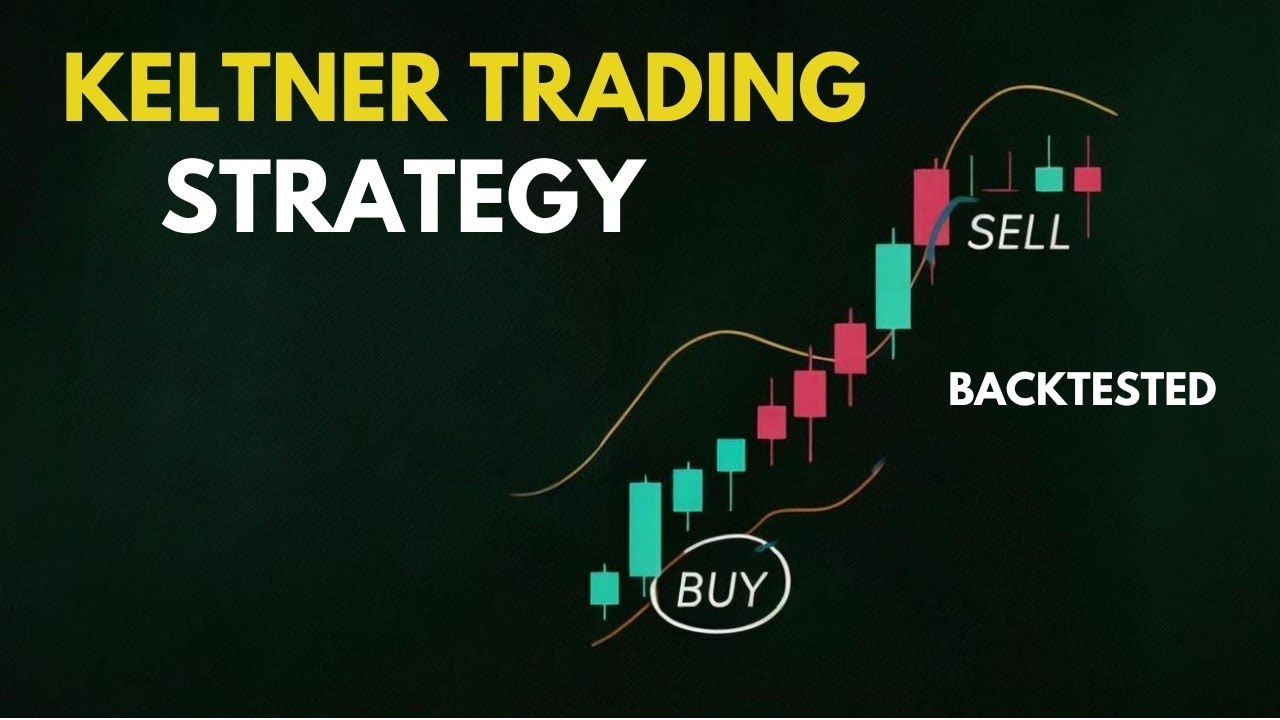
The source video backtests a Keltner Channel trading strategy across multiple instruments, demonstrating how Keltner-based volatility envelopes identify breakout conditions when combined with price confirmation. That framework — pairing channel-based volatility measurement with a directional trigger rather than trading the channel boundaries alone — directly informed the Bollinger-Keltner squeeze confluence used in the rules above.