Introduction
The GBPUSD Candle Pattern Momentum Strategy reads raw price structure through Candle Pattern signals — specifically Bullish Engulfing and Bearish Engulfing formations — anchored to key Price Level support and resistance zones on 15-minute GBPUSD charts. Rather than waiting for a lagging oscillator to confirm what price action already shows, this strategy enters the moment a high-conviction candle pattern closes at a structurally significant level, using ATR to size the stop and lock in a minimum 2:1 risk-to-reward target. It is a momentum strategy — equally comfortable taking longs and shorts — and performs best in trending or impulsive conditions where candlestick reversals at price levels produce measured, directional follow-through rather than choppy sideways action.
Geopolitical uncertainty has returned to the forefront this week. Reports that the Trump administration cancelled a Pakistan diplomatic mission — widely interpreted as a signal of deteriorating US–Iran relations — have injected risk-off sentiment into major currency pairs. GBPUSD, which is highly sensitive to shifts in global risk appetite, has been trading with elevated intraday ranges as traders reprice the possibility of renewed Middle East conflict. In this environment, clear candlestick confirmation at well-defined price levels provides an edge over purely indicator-driven systems — when sentiment is shifting rapidly, price often telegraphs the move before any oscillator catches up.
The Anatomy of the Trade
The Logic: What Inefficiency Are We Exploiting?
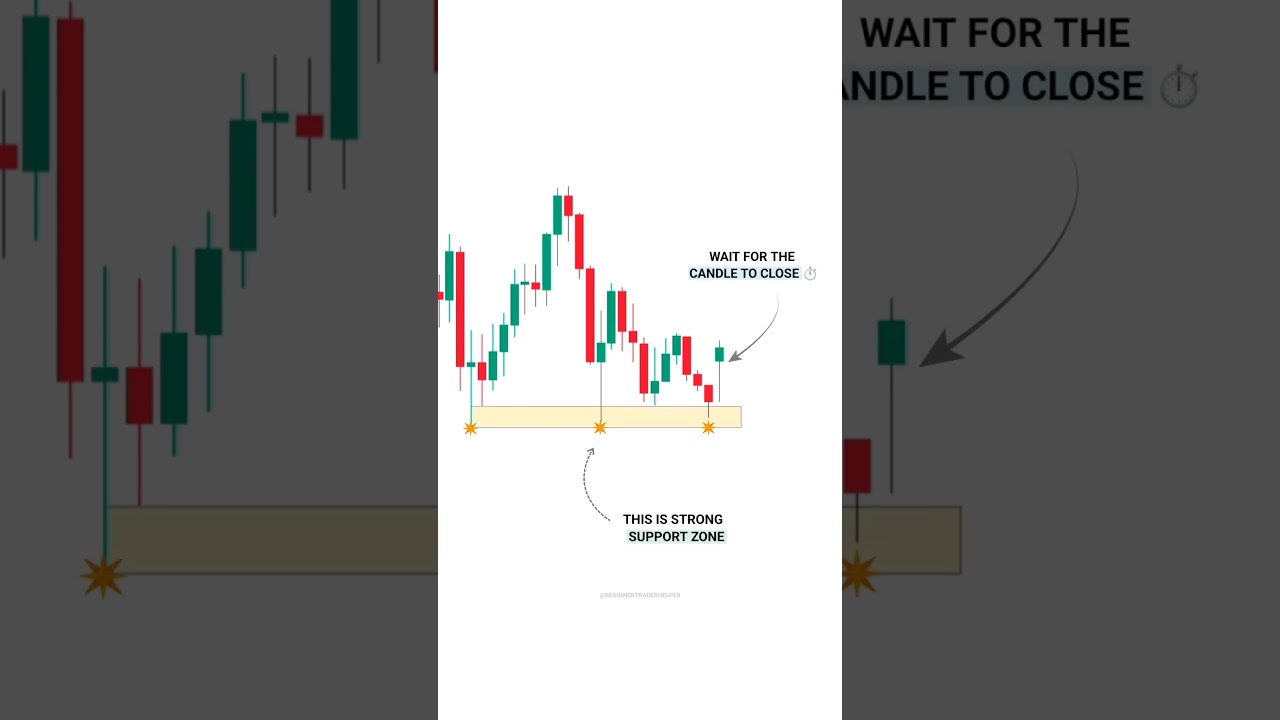
Candlestick engulfing patterns are among the most reliable signals in price action because they represent a complete intrabar sentiment shift: buyers overwhelm sellers (Bullish Engulfing) or sellers overwhelm buyers (Bearish Engulfing) within a single candle close. When this shift occurs directly at a previously established Price Level support or resistance zone, the probability of follow-through rises sharply — institutional participants who placed orders at that level have been absorbed or squeezed, and the resulting imbalance propels price in the direction of the engulfing candle.
The 15-minute timeframe on GBPUSD offers an optimal balance between signal frequency and signal quality. Too short and noise drowns the pattern; too long and intraday opportunities are missed. By requiring the engulfing candle to close at a price level zone — not just appear anywhere on the chart — the system filters out the majority of false signals that appear in open air. Confluence between the structural location and the candlestick close is the edge: without the price level filter, engulfing patterns degrade to roughly coin-flip accuracy in ranging conditions.
Setup Requirements
- Primary Signal: Candle Pattern — Bullish Engulfing (long) or Bearish Engulfing (short); default pattern settings on the 15-minute chart
- Structural Filter: Price Level — identify recent swing highs and swing lows on the 15m and 1-hour charts as support and resistance zones; the engulfing candle must close at one of these levels
- Risk Tool: ATR (14-period) — used to size the stop loss at 1.5× ATR from the entry candle and confirm the risk-to-reward target is achievable before committing
- Primary Symbol: GBPUSD — high intraday liquidity, tight spreads during London and New York sessions, and well-defined institutional order flow make candle pattern signals at price levels more reliable than in lower-volume pairs
- Timeframe: 15 minutes — provides enough bar density for reliable engulfing formations while keeping stop sizes manageable relative to the intraday move
- Adaptability: The same setup applies to any liquid Forex pair during its primary session; EURUSD and USDJPY are natural alternatives, though spread costs and session timing should be re-validated
Entry Rules
Both conditions must align on the same 15-minute candle close before an entry is triggered.
- Long Entry: A Bullish Engulfing pattern closes at or just above a defined Price Level support zone and the second candle body fully engulfs the prior bearish body with the close in the upper half of the candle range
- Short Entry: A Bearish Engulfing pattern closes at or just below a defined Price Level resistance zone and the second candle body fully engulfs the prior bullish body with the close in the lower half of the candle range
Enter at the close of the confirmation candle. Do not anticipate the signal by entering before the 15-minute bar closes — an engulfing pattern can appear partially formed mid-bar and fail to close as a valid engulf, particularly during high-impact GBP news events where price wicks aggressively before reversing.
Exit Rules
- Stop Loss: Place at 1.5× ATR below the entry candle low (long) or above the entry candle high (short) — calculated at entry time and held fixed for the life of the trade
- Take Profit: Minimum 2:1 reward-to-risk ratio; if 1.5× ATR equals 18 pips, the minimum target is 36 pips above entry for a long
- Signal Exit: If an opposing Engulfing pattern closes before the profit target is reached, exit immediately regardless of open P&L
The stop loss is non-negotiable. GBPUSD can gap through support or resistance on a BoE statement or US data print — moving the stop “to give it room” after a spike converts a structured trade into a hope trade. Accept the loss, reset, and look for the next qualifying setup at the next price level.
Risk Management
- Risk per trade: 1–2% of total account equity per trade
- Risk-to-reward ratio: Minimum 2:1 — verify that the next significant price level in the trade direction provides enough room for the target before entering
- Position sizing: Divide your dollar risk by the ATR-based stop in dollar terms. Example: $10,000 account, 1% risk = $100 at risk; if 1.5× ATR equals 18 pips and 1 standard lot = $10/pip, stop cost = $180 — trade 0.55 lots ($100 ÷ $180)
- Maximum concurrent positions: No more than 2 open GBPUSD positions at once during high-impact news windows — stacking directional positions into a BoE or NFP print doubles exposure to the same macro shock
Copy the strategy rules below and paste them as a Strategy Note in the Arconomy Strategy Builder to keep your logic visible while building.
SYMBOL:     GBPUSD
TIMEFRAME:  15m

LONG ENTRY:
  candle closes as Bullish Engulfing          // second body fully engulfs prior bearish body
  close is at or above Price Level support     // structural confluence required

SHORT ENTRY:
  candle closes as Bearish Engulfing          // second body fully engulfs prior bullish body
  close is at or below Price Level resistance  // structural confluence required

STOP LOSS:   1.5 × ATR  // from entry candle, fixed at entry

TAKE PROFIT: 2:1         // minimum reward-to-risk ratio

SIGNAL EXIT: opposing Engulfing pattern closes before target

RISK:        1–2%       // of account equity per trade
Common Pitfalls
Even a structurally sound setup like this one can produce consistent losses if execution discipline breaks down. These are the failure modes most commonly associated with candlestick-based momentum strategies on GBPUSD.
Trading in Low-Volatility, Range-Bound Conditions
Engulfing patterns in a sideways, compressed market occur frequently but rarely follow through. If GBPUSD is chopping inside a 20–30 pip range and ATR is contracting, step aside entirely — the pattern fires, price moves a few pips, stalls, and reverses into the stop. Wait for ATR expansion or a clear structural break before re-engaging.
Ignoring High-Impact GBP and USD News Events
A Bullish Engulfing at support can become irrelevant in seconds when the Bank of England surprises markets or NFP prints outside expectations. Avoid entering new positions in the 15 minutes before and after scheduled high-impact events on the economic calendar. An engulfing candle that forms entirely within a news spike is not a structural signal — it is noise.
Overtrading by Lowering the Structural Filter
Once traders see a few profitable engulfing signals, the temptation is to start entering on patterns that appear in open air — not at a defined price level. Every entry must have a clearly identified support or resistance zone as its anchor. Engulfing patterns without structural context have a much lower win rate and their stop placement becomes arbitrary.
Curve-Fitting the Pattern Lookback Period
It is tempting to backtest different engulfing pattern settings and select the period that maximises historical returns. Optimising pattern parameters to historical data almost always degrades forward performance because the “optimal” settings capture noise rather than signal. Use the default Candle Pattern settings, keep the structural filter consistent, and accept that no parameter set will win every trade.
Revenge Trading After a Stop-Out at a Key Level
When a well-structured trade is stopped out — particularly when price subsequently moves in the anticipated direction without you — the instinct is to re-enter immediately with a larger position. Wait for the next clean engulfing setup at a fresh price level. Revenge positions are almost always taken at inferior locations, with widened stops that dilute the risk-to-reward ratio and amplify drawdown beyond what the system was designed to handle.
Build Strategy using Arconomy
To replicate the GBPUSD Candle Pattern Momentum Strategy in the Arconomy Strategy Designer, add the following rules in sequence. No coding required — each rule maps directly to one step in the entry, confirmation, and exit logic.
| Step | Rule(s) Required | Description | Key Configuration |
|---|---|---|---|
| Data | Price Data | Load GBPUSD 15-minute OHLC bars as the primary data feed for pattern detection and level mapping |
|
| Entry | Candle Pattern | Detect Bullish Engulfing (long) and Bearish Engulfing (short) patterns on the close of each 15-minute bar |
|
| Confirm | Price Level | Require the engulfing candle to close at or near a key support or resistance zone to filter out low-quality signals in open air |
|
| Risk | ATR | Size the stop loss at 1.5× ATR below the entry candle low (long) or above the entry candle high (short); fixed at entry |
|
| Exit | Take Profit | Set a minimum 2:1 reward-to-risk profit target; exit early if an opposing Engulfing pattern closes before the target is reached |
|
| Backtest | Run a backtest across at least 12 months of GBPUSD 15m data covering varied volatility regimes; target a profit factor above 1.3 with maximum drawdown below 15% of equity |
|
Backtest Considerations
Run this strategy over a minimum of 12 months of GBPUSD 15-minute data, ensuring the sample includes at least one prolonged trending period, one sustained ranging environment, and one high-volatility macro shock such as a central bank surprise or geopolitical event. A test covering only a trending market will overstate the strategy’s robustness — engulfing patterns at price levels perform very differently when price is impulsive versus when it is consolidating between two contested levels.
Key metrics to monitor: profit factor above 1.3 (anything below suggests the wins do not adequately compensate for the losses), maximum drawdown below 15% of starting equity, and a trade distribution that shows entries spread across both London and New York sessions rather than clustering in a single hour. If the system is producing all its wins in one narrow time window, investigate whether the price level detection is implicitly biased toward session-open ranges. Arconomy’s backtesting engine provides all of these metrics natively.
GBPUSD spreads widen significantly around BoE decisions, US CPI prints, and during the Asian session crossover. If your backtest uses a fixed 1-pip spread assumption, results will be optimistic — apply a variable spread model or add a minimum 2-pip cost for trades that occur within 30 minutes of a scheduled high-impact event. Slippage on the 15-minute engulfing entry is typically low because you are entering at bar close on a liquid pair, but account for at least 0.5 pips of execution slippage per side when stress-testing the system under fast-market conditions.
Key Takeaways
- The core edge is the confluence of a Bullish or Bearish Engulfing candle closing directly at a defined Price Level support or resistance zone — without the structural anchor, the pattern degrades to noise.
- Confirmation of both the candle pattern and the price level simultaneously is what separates this system from a generic engulfing strategy; neither condition alone is sufficient for entry.
- Risk is managed with a 1.5× ATR stop loss and a minimum 2:1 reward-to-risk ratio — these are hard rules, not suggestions, and moving the stop after entry eliminates the statistical edge entirely.
- Avoid trading this strategy during low-volatility chop, within 15 minutes of high-impact news events, or when ATR is contracting — those conditions produce engulfing patterns with no meaningful follow-through.
- Backtest across at least 12 months of varied GBPUSD conditions, apply realistic spread assumptions, and target a profit factor above 1.3 before considering live deployment.
Credits
The strategy idea originated from the following YouTube channel. Concepts have been adapted and structured for systematic implementation by Arconomy.